Explore
Observe a system, identify a question and understand the challenge.

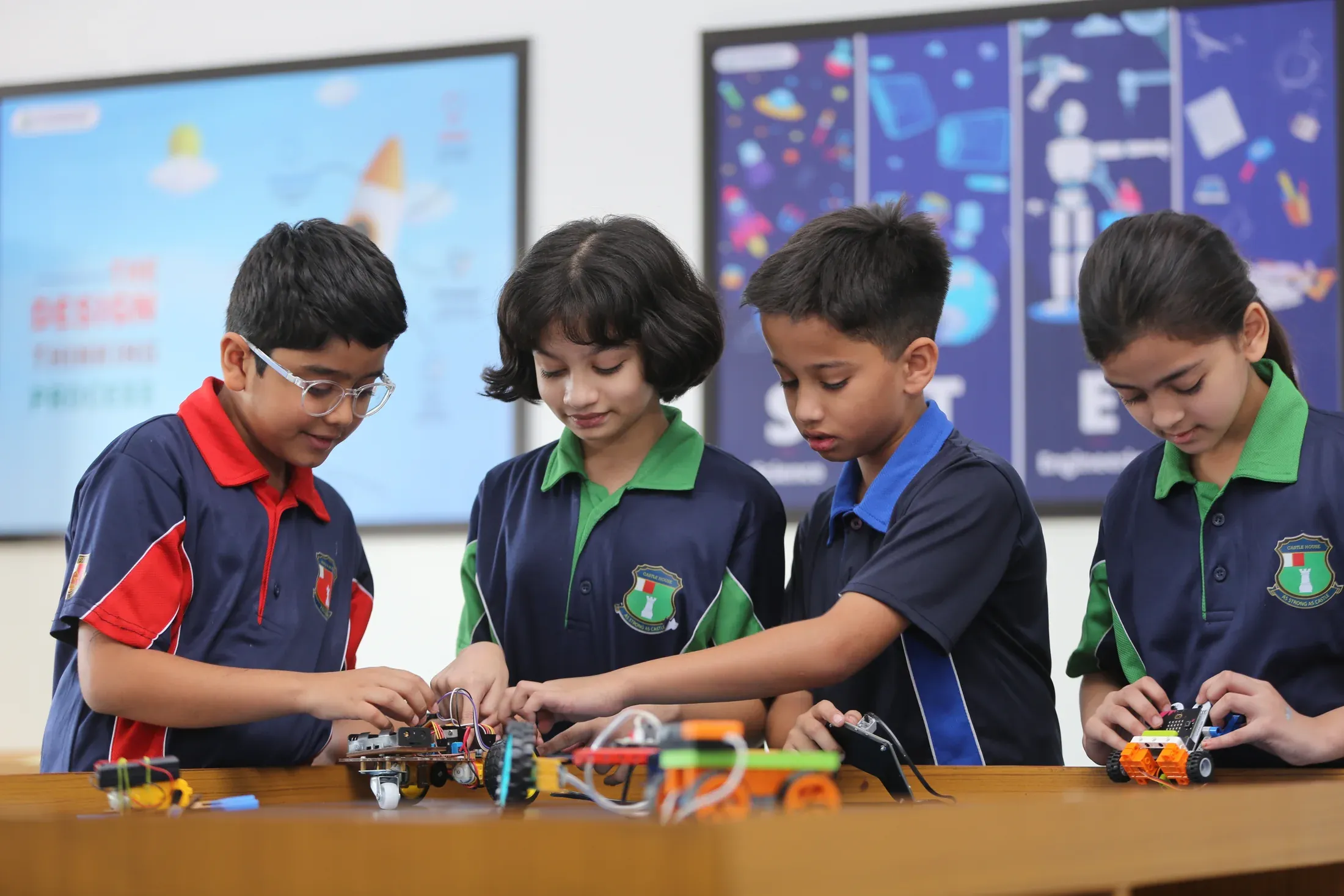
Future Ready at ASPAM
Hands-on exploration connects systems thinking, design, building, testing and responsible technology use.
Technology with judgement
Digital fluency grows when learners understand what technology can do—and use it with purpose.
STEM tasks, coding and robotics create opportunities to investigate systems, translate ideas into prototypes and learn from testing. The emphasis remains on active participation and thoughtful use rather than technology for its own sake.
A practical learning cycle
Observe a system, identify a question and understand the challenge.
Compare possibilities and decide how an idea might work.
Use code, components or models to make thinking visible.
Observe performance, identify gaps and respond to what happens.
Refine the work and explain the choices made.
Learning by building
A student EV project alongside STEM classroom activity.
Student project
Classroom practice
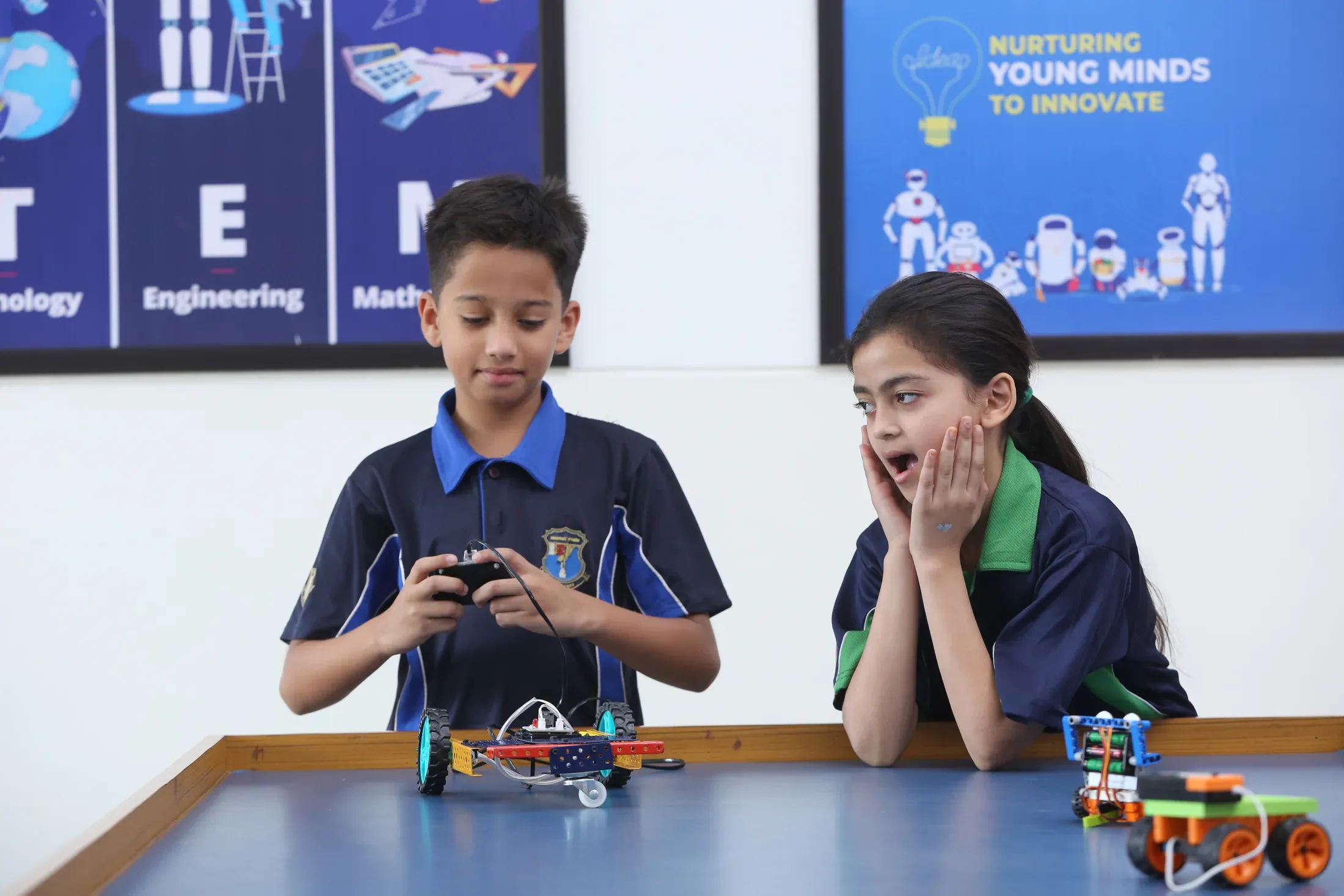
Learning in action
In November 2025, students worked with small robotics kits in the STEM Lab, building and discussing their ideas together.
Current programme scope
For 2026–27, ASPAM introduced Artificial Intelligence (Subject Code 417) as an optional skill subject for Class IX. Coding and robotics also appear in activity-based and club learning.
Tasks and projects connect creativity, logical thinking, problem solving and innovation.
Activity-based and club learning develops sequencing and practical problem solving.
The Class IX option covers employability skills, basic Python, the AI project cycle and foundational data literacy.
Speaking, listening, role play, conversation, storytelling, recitation and presentations support expression.
See learning in action
Plan a campus visit and speak with the admissions team about the learning stage relevant to your child.